The Spanish Grand Prix was first held in 1913 and it joined the Formula 1 World Championship in 1951. It’s one of the oldest races on the F1 calendar.
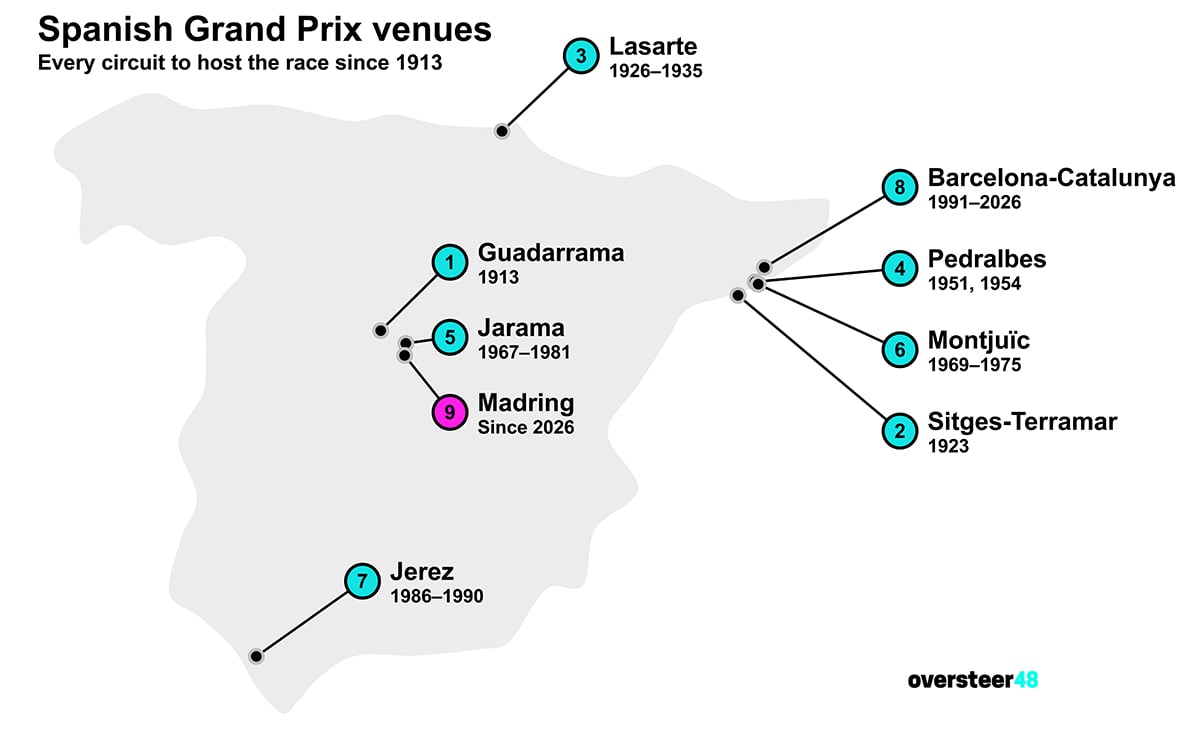
Since it was first held over 100 years ago the race has moved between nine different circuits across Madrid, Barcelona, the Basque Country and Andalusia.
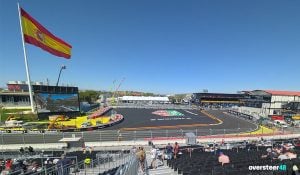
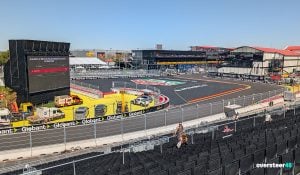
From 1991 to 2025 the Spanish Grand Prix was held at the Barcelona-Catalunya circuit, which also hosted winter testing. But from 2026 onwards the the Spanish Grand Prix has been held at the new Madring circuit, a hybrid street track around the IFEMA exhibition centre in North-East Madrid.
Barcelona-Cataluyna remains on the F1 calendar in alternating years.
Venues
- Guadarrama, near Madrid – 1913
- Sitges-Terramar, near Barcelona – 1923
- Lasarte, near San Sebastián – 1926–1929, 1933–1935
- Pedralbes, Barcelona – 1951, 1954
- Jarama, Madrid – 1967–1981, alternating with Montjuïc until 1975 (1967 and 1980 were non-championship races)
- Montjuïc, Barcelona – 1969, 1971, 1973, 1975
- Jerez, Andalusia – 1986–1990
- Circuit de Barcelona-Catalunya, Montmeló – 1991–2026
- Madring, Madrid – 2026 onwards
The first race that was recognised as a Spanish Grand Prix ran in 1913 on public roads through the Guadarrama mountains between Madrid and Segovia. It was won by Spaniard Carlos de Salamanca in a Rolls-Royce. The race moved to the banked Sitges-Terramar oval near Barcelona in 1923, then to Lasarte near San Sebastián, where Mercedes-Benz won in 1934 and 1935 before the Spanish Civil War stopped racing.
The Spanish Grand Prix officially joined the Formula 1 World Championship in 1951 at Pedralbes, a fast 6km street circuit in Barcelona. The legendary Juan Manuel Fangio won it for Alfa Romeo and clinched the first of his five world titles there. Mike Hawthorn won the 1954 race for Ferrari, but the 1955 Le Mans disaster brought tighter safety rules and the Pedralbes circuit never hosted F1 again.
F1 returned in 1968, alternating between Jarama near Madrid and Barcelona’s Montjuïc Park until a crash at Montjuïc killed four people in 1975. Jarama then hosted alone until 1981, before the race moved to Jerez from 1986 to 1990.
The Modern Era
Barcelona-Catalunya
The Circuit de Barcelona-Catalunya in Montmeló hosted its first Spanish Grand Prix in 1991 and went on to hold 35 in a row, the last officially was in 2025. It has also been one of F1’s winter testing venues for years, so it has become one of the driver’s best known circuits.
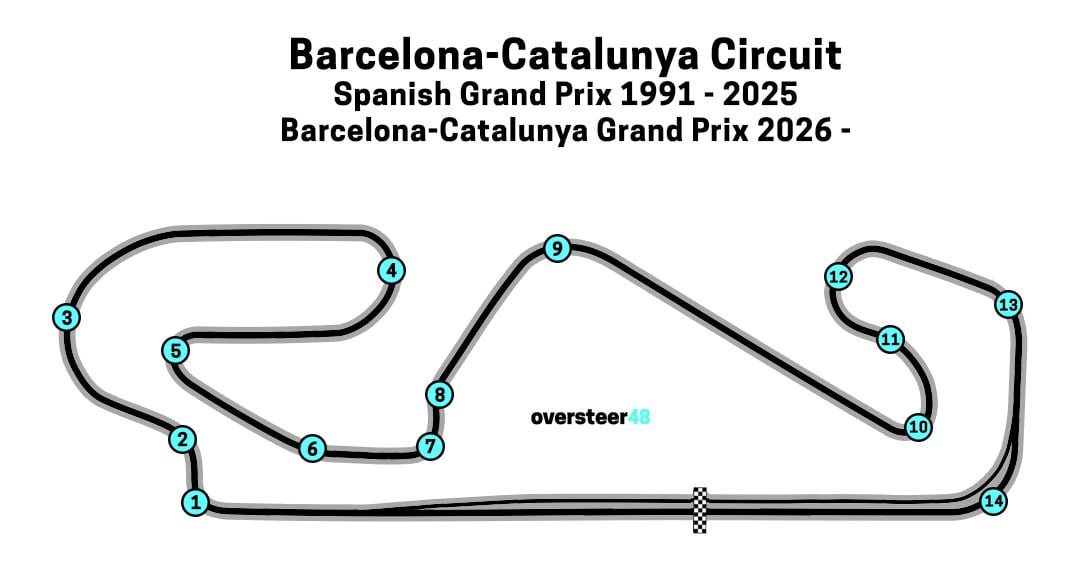
The drivers to have won most races at Barcelona-Catalunya are Michael Schumacher and Lewis Hamilton who have both won six times. Schumacher won four in a row for Ferrari from 2001 to 2004. Lewis Hamilton beat that with five straight victories from 2017 to 2021.
Fernando Alonso is the only Spanish driver to win his home Grand Prix since the race joined the F1 calendar. He won at Catalunya in 2006 for Renault and then again seven years later for Ferrari in 2013.
Oscar Piastri won the final Barcelona-hosted Spanish Grand Prix in 2025, leading a McLaren one-two and setting the circuit’s race lap record in the process.
As the new Madring circuit was being built it looked like the Catalunya circuit might fall off the calendar completely, which would have been a massive shame. But F1 has reached a deal with the circuit’s promoters to hold the newly named Barcelona-Catalunya Grand Prix at the circuit in 2026, 2028, 2030 and 2032, alternating with the Belgian GP at Spa Francorchamps.
Madring
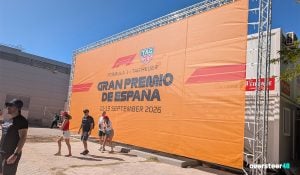
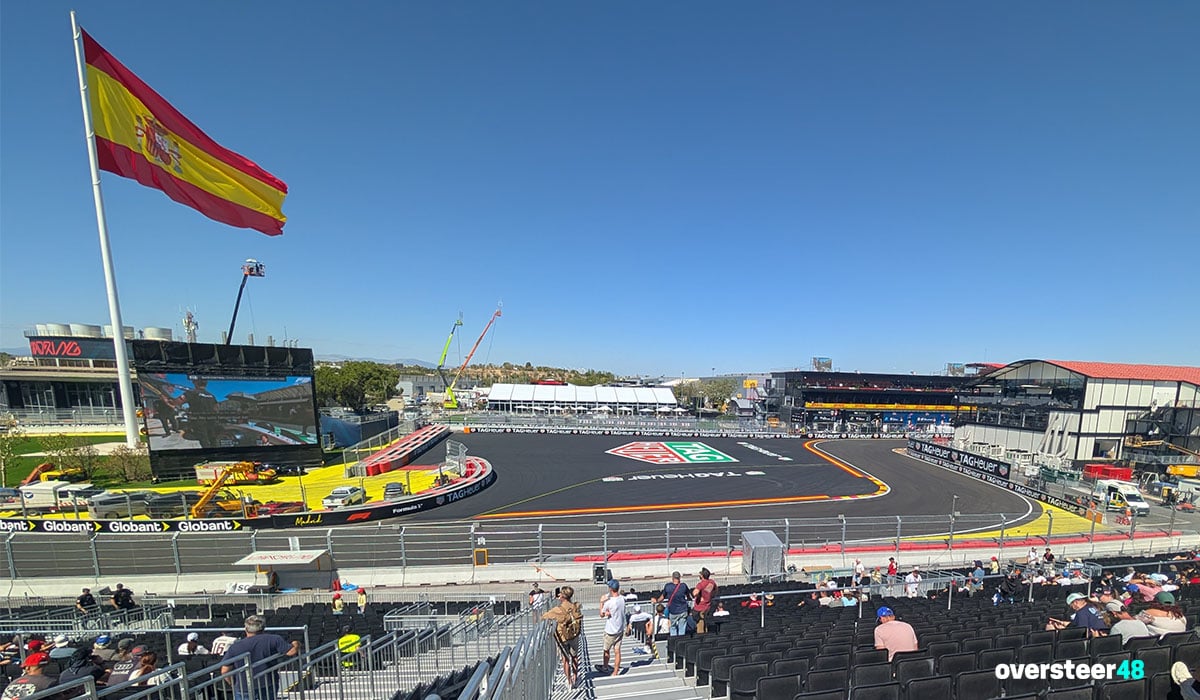
The Spanish Grand Prix returned to Madrid in 2026, 45 years after Jarama last hosted it in the same region. The new Madring circuit is now home to the race, a hybrid street circuit centred around the IFEMA exhibition centre.
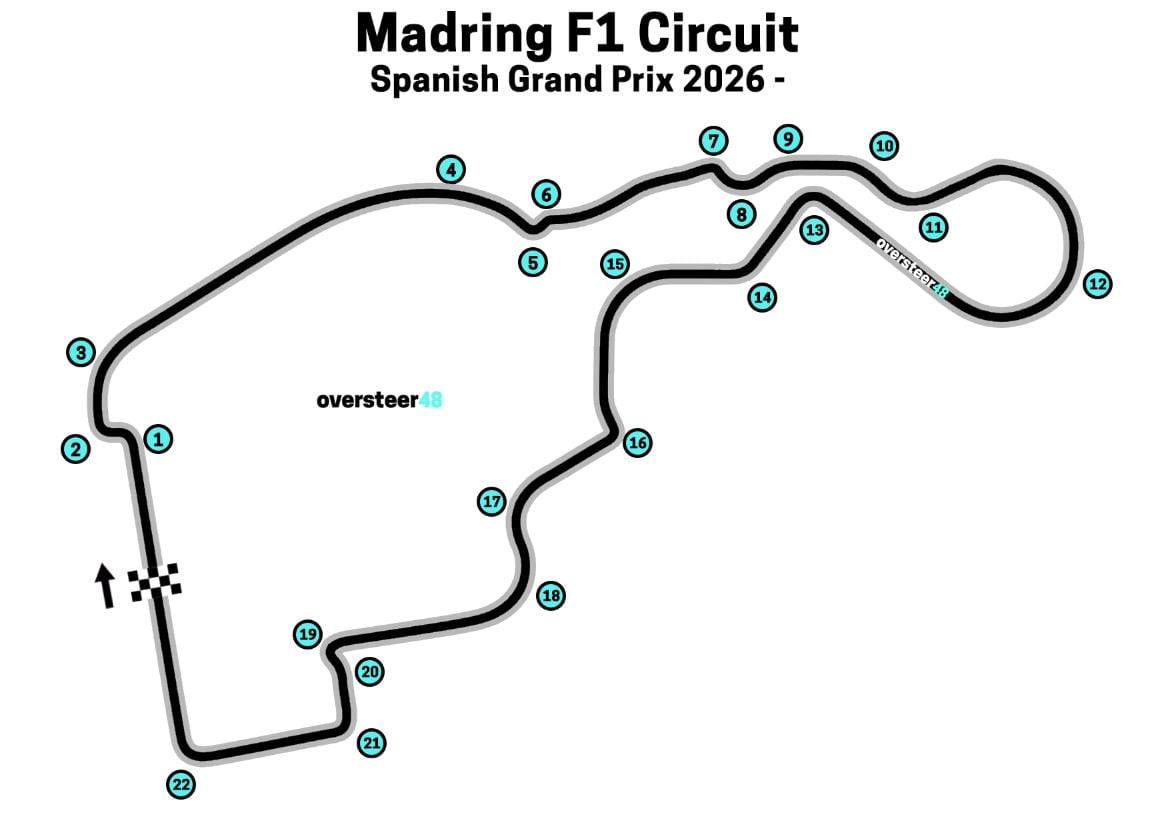
The circuit has a ten-year contract to hold the race up to and including 2035. Reportedly the venue pays around €48 million a year to host the race (unconfirmed), which is a lot more than the reported €23 million that Barcelona-Catalunya was previously paying – and you can see why F1 were keen to switch to the new circuit.
The main construction contract to build the Madring circuit cost €83.2 million, but Spanish news outlets report the total build cost was closer to €200 million.
Despite the immense cost of designing and building the circuit, the first Spanish Grand Prix held on the Madring in 2026 was a real let down. It turned out to be almost impossible for the F1 drivers to overtake, with only 4 passes happening during the 57 lap race.
Kimi Antonelli won the inaugural race after an ill-timed safety car meant Lando Norris, who had been leading comfortably, lost out.
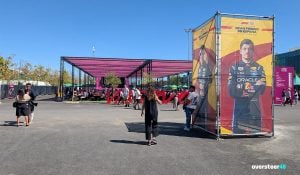
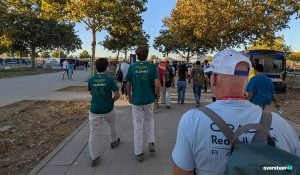
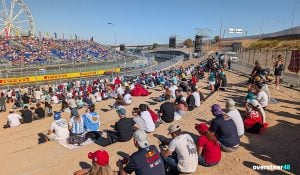
On the first weekend at the new circuit the organisers reported that tickets were sold out, and that 353,000 fans came to the track across the weekend despite high prices, poor views, hot conditions and minimal shade.
Spanish Grand Prix - Did you know?
- Michael Schumacher and Lewis Hamilton share the record for most Spanish Grand Prix victories with six each. Schumacher also holds the record for poles, with seven.
- Ferrari is the most successful team at the Spanish GP, with 12 wins between 1954 and 2013. Mercedes is next with eight, the latest being Antonelli’s Madring victory in 2026.
- Lella Lombardi scored half a point for sixth at Montjuïc in 1975. She remains the only woman to score World Championship points.
- The 1975 Spanish GP was the first in F1 history to award half points, after it was stopped short of the required distance due to a horrific crash killing four spectators.
- Max Verstappen won the 2016 Spanish Grand Prix on his Red Bull debut at Barcelona-Catalunya, becoming F1’s youngest winner on that day at 18 years and 228 days.
- Four drivers took their first Grand Prix win in Spain: Niki Lauda (1974), Jochen Mass (1975), Pastor Maldonado (2012) and Max Verstappen (2016).
- Before Fernando Alonso in 2006, the only Spaniard to win the Spanish Grand Prix was Carlos de Salamanca, in the 1913 touring car race.
- Spain hosted two Grand Prix from 2008 to 2012, with the Valencia Street Circuit holding the European Grand Prix during those years alongside Catalunya.
- Spain hosted two Grands Prix in 2026: the Barcelona-Catalunya Grand Prix in June and the Spanish Grand Prix in Madrid in September. Spain will have two races again in 2028, 2030 and 2032.