Over the past decade, Iran has intermittently surfaced in Formula 1 expansion conversations — sometimes through ambitious political statements, more recently through actual circuit construction. While no Grand Prix has materialised, the country has long held an interest in hosting an F1 event. But now that seems more unlikely than ever.
The Qeshm Island Proposal
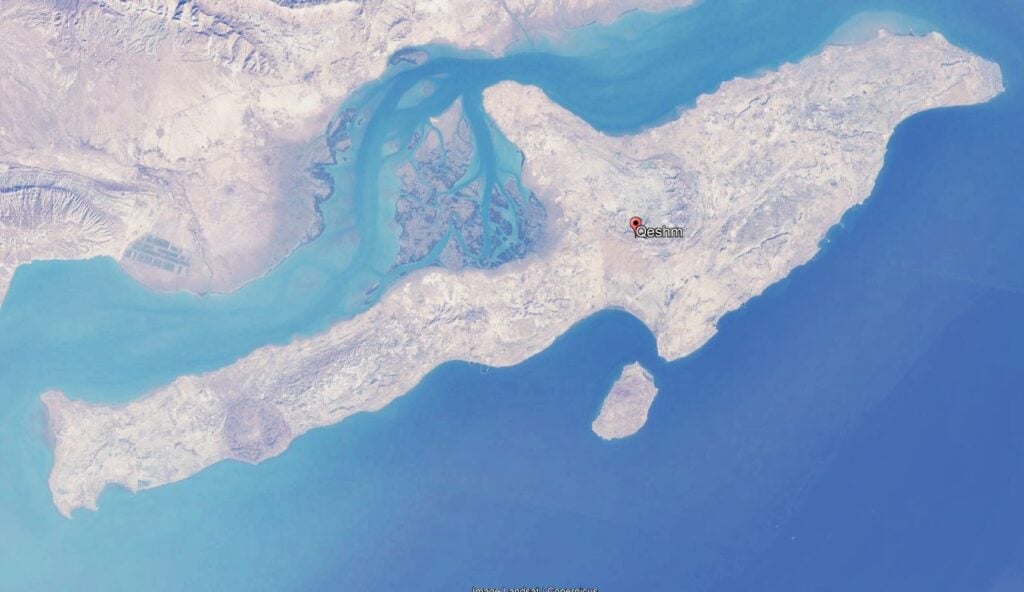
The most eye-catching plan emerged in 2015 when Iranian officials announced intentions to build a Formula One circuit on Qeshm Island, located a few kilometres off the southern coast of Iran in the Persian Gulf. The proposal suggested the island could become “one of the world’s most beautiful” F1 destinations.
Masoud Soltanifar, then Vice President and Head of Iran’s Cultural Heritage, Handicrafts and Tourism Organisation, stated that the country’s youthful population and growing interest in driving made Formula One a logical step. The ambition coincided with a period of F1 expansion — Mexico was returning to the calendar and Baku was preparing to host the European Grand Prix — giving the impression that new frontiers were genuinely attainable.
On paper, Qeshm would have offered a spectacular backdrop. The island features beaches, mountains, forests, deserts and dramatic salt caves. It is also one of the largest islands in the Persian Gulf and an emerging ecotourism location with significant biodiversity, coral reefs and protected wildlife habitats.
However, building a circuit is only the beginning. F1 requires far more than an FIA Grade 1 track. Race-hosting fees, freight logistics, visa accessibility, international connectivity and commercial viability all play critical roles. As history has shown, circuits such as Imola, Istanbul Park, Korea International Circuit, Buddh International Circuit and others have held — or still hold — Grade 1 status without a guaranteed place on the calendar. A licence is a prerequisite, not a promise.
The iLand Project and Zarandieh Autodrome
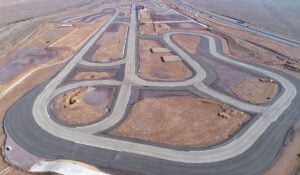
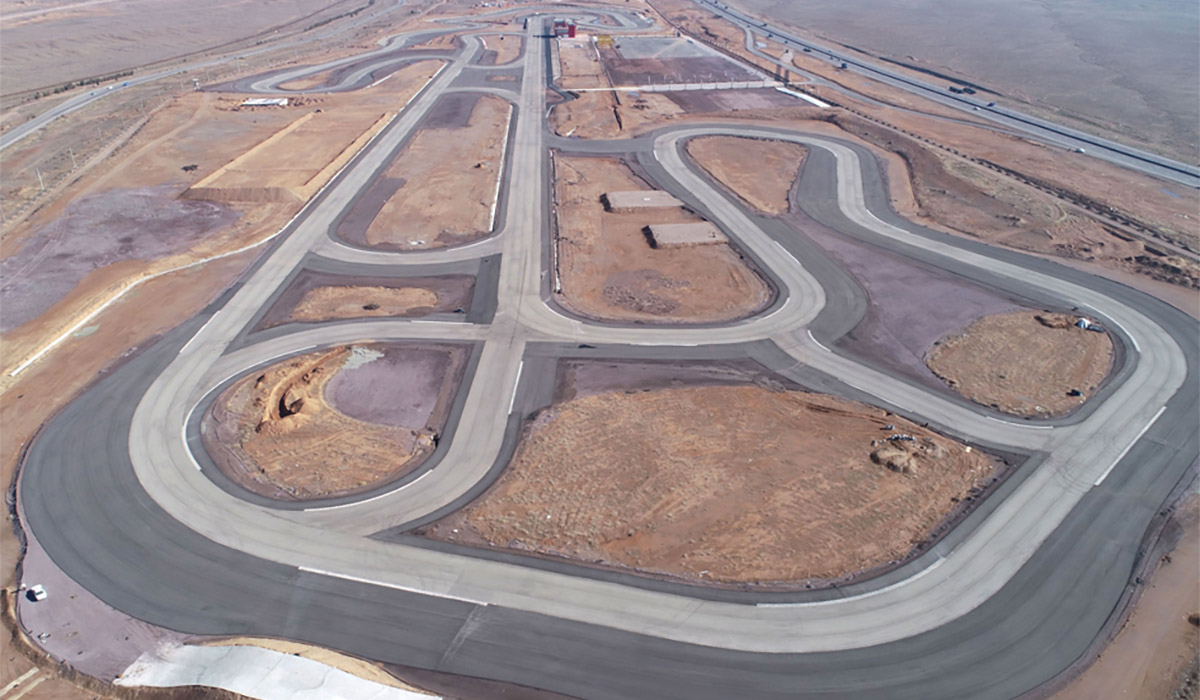
Separate from the Qeshm vision was a more concrete development near Tehran. The iLand Race Resort, part of a wider science and technology park southwest of the capital, began construction around 2012. Designed by UK-based Apex Circuit Design rather than Hermann Tilke, the 5km layout was conceived in the style of naturally contoured circuits such as Spa-Francorchamps, Silverstone, the Nürburgring Nordschleife, Suzuka, Hockenheim and Sepang.
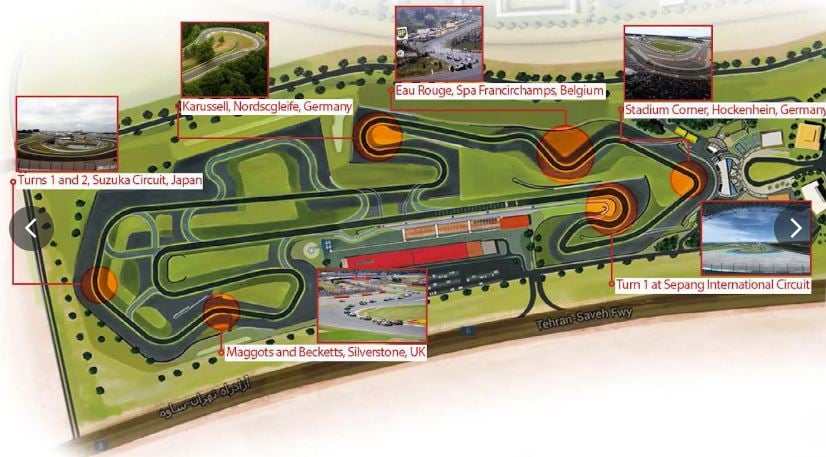
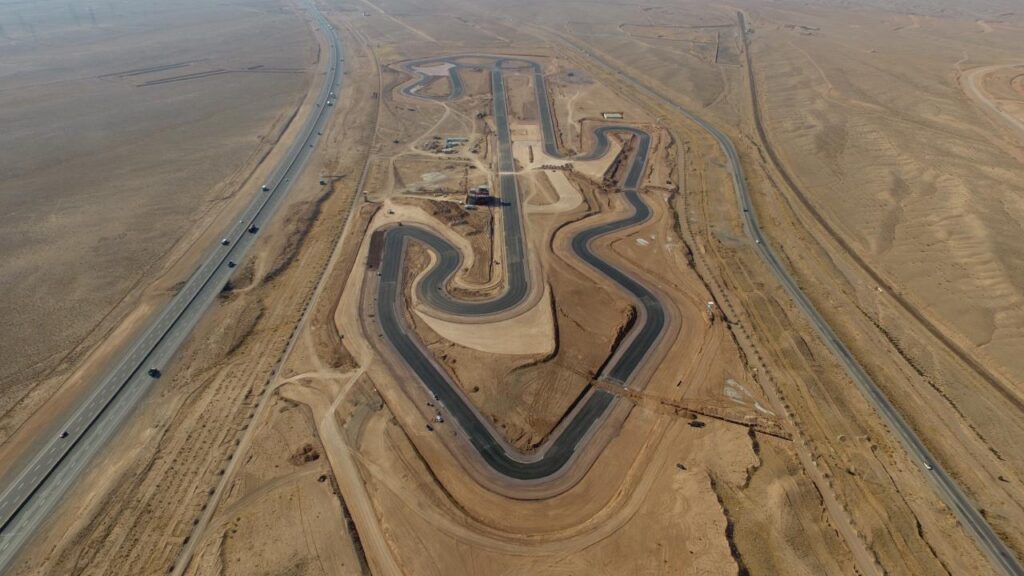
Built across 75 hectares at approximately 1,100 metres above sea level, the track incorporates a 22-metre elevation change and a flowing sequence of corners, including a notable high-speed section from Turn 12 to 17. The complex was designed to include a country club, expo centre, karting facilities and a road safety training school.
Crucially, the circuit — now known as the Zarandieh International Autodrome — was constructed to FIA Grade 2 specification. That classification allows categories such as GP2 (now Formula 2), LMP machinery and potentially other high-level single-seater or endurance series, but not Formula One.
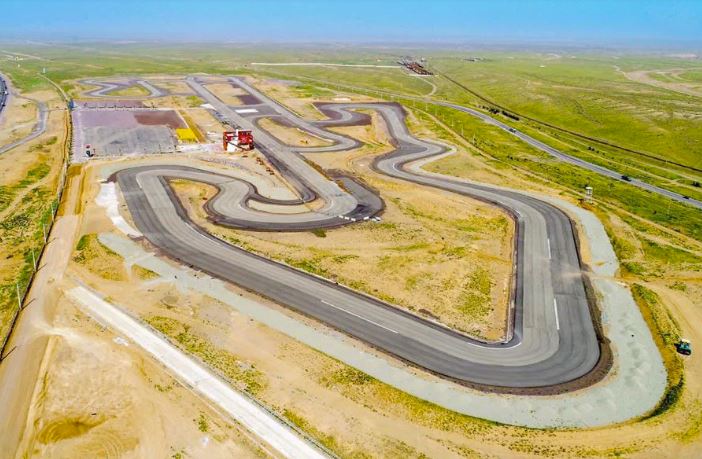
Despite some later reports suggesting the track could achieve Grade 1 approval, its initial certification explicitly excluded F1. In June 2021, local media reported that the circuit was “suitable for holding Formula One competitions according to FIA standards,” with 90% of construction complete at the time. However, suitability in principle differs from formal Grade 1 homologation and, more importantly, from securing a commercial agreement with Formula One Management.
Even if upgraded, Zarandieh’s location — roughly 50km south of Tehran near Imam Khomeini International Airport — would present logistical and political considerations that go beyond circuit design.
In the current climate, internation tensions with Iran — alongside wider regional instability — reduce the likelihood of an F1 event ever taking place there. Formula One is a global commercial enterprise dependent on multinational sponsors, broadcasters, team personnel and logistical partners. Any venue must guarantee operational certainty, safety, and minimal political risk.
With the Middle East already hosting Grands Prix in Bahrain, Saudi Arabia, Qatar and Abu Dhabi — all offering modern infrastructure and established aviation hubs — the commercial incentive to enter a more complex market is limited.
Given current international relations, particularly the strained dynamics between Iran and the United States, the prospect of Formula 1 racing in Iran in the foreseeable future appears extremely remote.